 Save to Pinterest
 Last spring, I found myself hosting a brunch with barely two hours notice, and a vegetable board became my unexpected hero. My neighbor had brought over a handful of impossibly perfect radishes from her garden, still dewy and crisp, and something clicked—why not build an entire platter around what felt fresh and alive? The herb dip came together in minutes, and watching people graze casually while chatting made me realize this wasn't just appetizer logistics, it was an invitation to slow down and enjoy real food.
That same brunch taught me something about presentation I hadn't expected: when you arrange vegetables with real intention rather than just dumping them on a plate, people eat more vegetables and actually savor them. A child who typically shoved aside anything green grabbed three radishes in a row, dipped them in the green herb situation, and asked for more. It shifted my whole approach to appetizers.
Ingredients
- Breakfast radishes: These mild, peppery ones are nothing like their sharp winter cousins—halving them shows off their beautiful pink and white striping while making them easier to grab and dip.
- Sugar snap peas: Their natural sweetness and satisfying crunch are what make people reach for them first, so trim them just before serving to keep that snappy texture alive.
- Fresh peas: If using fresh, blanch them briefly in salted boiling water and plunge into ice water to lock in their bright green color and tender sweetness.
- Baby carrots: The smaller ones have a sweeter flavor than full-size, and their shape makes them naturally dippable.
- Cherry tomatoes: Halving them prevents rolling and their cut sides catch the dip beautifully, plus the acidity balances the creamy dip.
- Cucumber slices: Cool and refreshing, they're the quiet anchor that lets other flavors shine.
- Greek yogurt: The tanginess is what makes this dip sing—don't skip it for a lighter base or you'll lose that signature flavor.
- Mayonnaise: Just two tablespoons adds richness without making it heavy, binding everything together smoothly.
- Fresh lemon juice: This is where brightness comes from, cutting through the richness and awakening all the herbs.
- Fresh herbs (chives, parsley, dill): Using fresh rather than dried transforms this from ordinary to something people remember, so don't shortcut here.
- Garlic: One small clove minced fine is enough to add depth without overwhelming—garlic powder would taste completely different and much harsher.
Tired of Takeout? 🥡
Get 10 meals you can make faster than delivery arrives. Seriously.
One email. No spam. Unsubscribe anytime.
Instructions
- Wash and prepare your vegetables:
- Rinse everything under cold water and pat dry thoroughly—wet vegetables won't hold dip as well and can make the board feel sloppy. As you trim each vegetable, think about how it will look on the board and arrange as you go, creating little clusters of color and height.
- Build your herb dip:
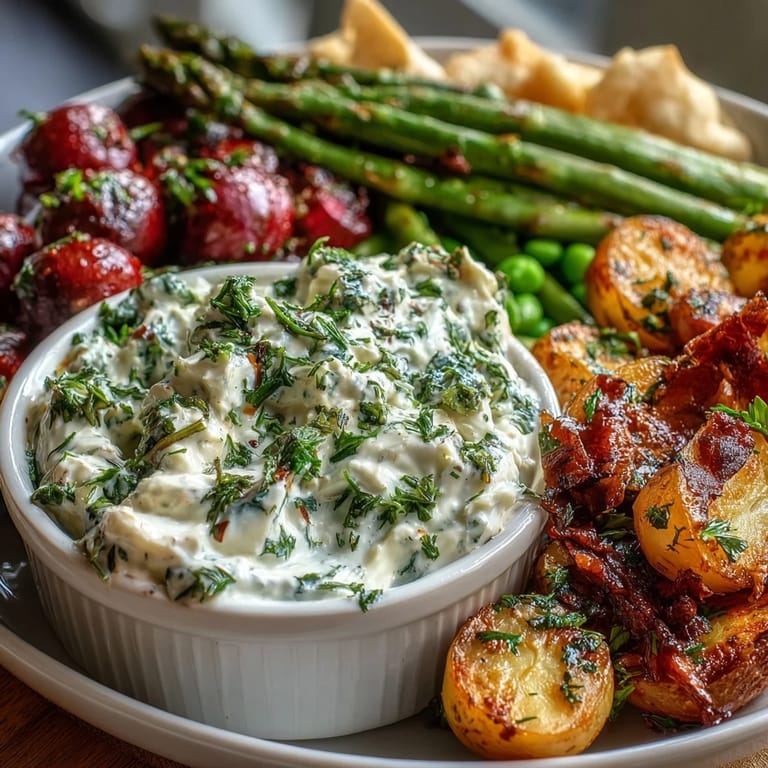
- Combine yogurt, mayo, and lemon juice in a bowl first, whisking until completely smooth before folding in the fresh herbs and garlic. This prevents streaky herbs and creates an even, creamy base that feels luxurious on the tongue.
- Season and taste:
- Add salt and pepper, stir, then taste a tiny spoonful—herbs can be unpredictable depending on freshness, so trust your palate over measurements. If it feels too thick, a splash of milk or a bit more lemon juice loosens it gently.
- Compose your board:
- Transfer the dip to a small serving bowl and nestle it among the vegetables, using height and color contrast to make the board feel intentional and inviting. Think of it like edible architecture where the eye moves around and wants to explore every area.
- Garnish and serve:
- A scatter of microgreens adds an elegant touch and microgreens taste like concentrated spring, while feta crumbles bring a salty, tangy counterpoint. Bring everything to the table immediately so the vegetables stay crisp and people can graze while the board is at its peak.
 Save to Pinterest
 I learned only after hosting that second board that people actually prefer to dip rather than eat vegetables plain, which seems obvious now but wasn't until I watched it happen. That moment changed how I think about serving food—it's not about having the fanciest ingredients, it's about creating a experience where people feel invited to touch, taste, and linger.
Why Spring Vegetables Matter Here
Spring vegetables have a delicate sweetness and tender texture that fall and winter produce can't match, and there's something almost ceremonial about serving them when they finally arrive at the market. The radishes, peas, and carrots aren't just flavor, they're a signal that the season has shifted and something new is possible. Using them within days of purchase means you get that subtle, complex flavor that makes people close their eyes for a second while chewing.
The Power of Fresh Herbs
This dip works because fresh herbs aren't just a garnish—they're the entire personality of the recipe. The combination of chives, parsley, and dill creates layers of green flavor that make people taste more, taste longer, and taste more intentionally. When I switched from dried herbs one time out of necessity, the dip tasted like every other yogurt dip that's ever existed, so this is one place where fresh is truly non-negotiable.
Board Building as a Quiet Art
Arranging a vegetable board is meditative if you let it be, moving vegetables around until they feel balanced rather than just placed. You want patches of green next to the pop of red tomatoes, the white inside of radishes catching light, empty space breathing between clusters so the eye can rest. It's like painting with vegetables, and the time you spend on it actually matters to how people experience eating.
- Start with your dip bowl in the center or slightly off-center, building vegetables around it in loose groupings rather than regimented rows.
- Tuck herbs and any garnish into the gaps at the end so they look like they happened naturally rather than placed deliberately.
- Stand back and look at the board from the angle your guests will see it—you might rearrange color one more time before serving.
 Save to Pinterest
 A vegetable board feels simple until you taste the dip and understand that the real magic is in how intentionally everything comes together. Keep making these, keep tasting how the flavors shift with seasons, and let people see you enjoying it first—that's what makes them reach for the radish.
Recipe FAQs
- → What vegetables are used on the spring food board?
The board features breakfast radishes, sugar snap peas, shelled peas, baby carrots, cherry tomatoes, and cucumber slices.
- → How is the herb dip prepared?
The dip is made by mixing Greek yogurt, mayonnaise, lemon juice, chopped chives, parsley, dill, minced garlic, salt, and pepper until smooth.
- → Can this platter accommodate dietary restrictions?
Yes, it suits vegetarian and gluten-free diets. Greek yogurt can be substituted with plant-based versions for a vegan option.
- → What garnishes enhance the spring food board?
Optional garnishes include microgreens, crumbled feta cheese, and assorted crackers or sliced baguette.
- → How should the platter be served for best flavor?
Arrange the trimmed and halved vegetables attractively on a large board, serve with the herb dip in a small bowl, and garnish as desired.
- → Can the herb dip be prepared ahead of time?
Yes, the dip can be made up to two days in advance and kept refrigerated to enhance flavor melding.