 Save to Pinterest
 My friend Sarah handed me a jar of homemade sauerkraut at a farmer's market one autumn morning, insisting I do something unexpected with it beyond the usual hot dog topping. That same week, I had three apples sitting on my counter getting softer by the day, and suddenly this warm skillet salad materialized—tangy, sweet, and deeply satisfying in a way that surprised us both when she came over for dinner.
I served this at a potluck once where everyone seemed skeptical about warm apple and sauerkraut together, but the platter came home nearly empty. One person even asked if I'd made it with some fancy technique, which made me laugh—it's literally just a skillet and fifteen minutes of actual cooking time.
Ingredients
- Apples (Honeycrisp or Gala): The sweetness matters here because it plays against the sauerkraut's tang, and these varieties hold their shape when sautéed instead of turning to mush.
- Red onion: The raw sharpness mellows beautifully as it cooks, adding natural sweetness and a gorgeous color that makes the whole dish pop.
- Fresh sauerkraut: Look for unpasteurized versions in the refrigerated section for maximum probiotic benefit, and always drain it well so your skillet doesn't become watery.
- Olive oil: This is your cooking medium and flavor base, so don't skimp on quality—a good extra virgin oil elevates the whole dish.
- Apple cider vinegar: The acidity brightens everything and deepens the apple flavor in an almost magical way.
- Honey or maple syrup: Just a teaspoon rounds out the flavors and prevents the dish from tasting too acidic or one-dimensional.
- Caraway seeds: These are optional, but if you've never tried them, they're the secret ingredient that screams 'German kitchen' in the best way possible.
- Fresh parsley: Add this after cooking so it stays vibrant and adds a fresh herbal note that cuts through the richness.
- Toasted walnuts or pecans: The nuttiness provides textural contrast and makes the salad feel more substantial as a main course.
Tired of Takeout? 🥡
Get 10 meals you can make faster than delivery arrives. Seriously.
One email. No spam. Unsubscribe anytime.
Instructions
- Warm your skillet and start with the apples:
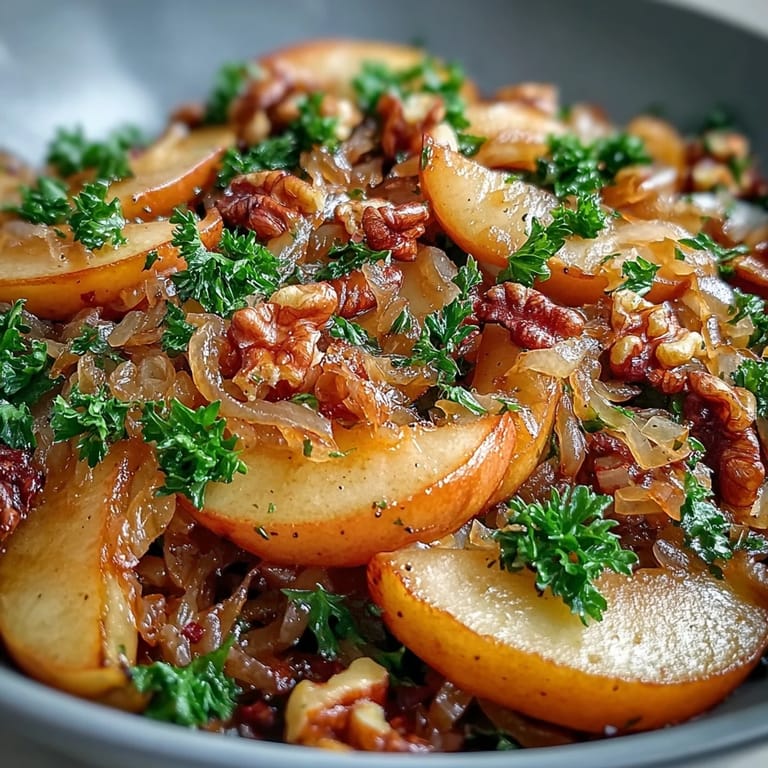
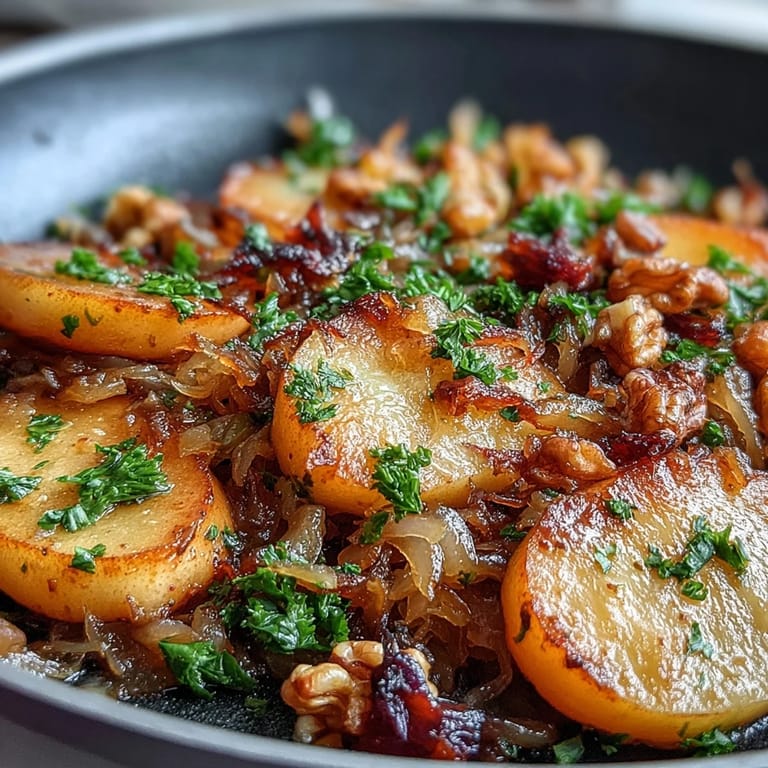
- Heat olive oil over medium heat until it shimmers slightly, then add your apple slices and red onion. You'll know they're ready when the apples develop golden-brown spots and the onion becomes translucent—this takes about five to six minutes, and the smell alone is worth making this recipe.
- Awaken the caraway (if using):
- Stir in those optional caraway seeds and let them toast for just a minute. The kitchen fills with this warm, almost rye-bread aroma that's impossible to describe unless you've smelled it before.
- Bring in the sauerkraut:
- Add your drained sauerkraut along with the vinegar, honey, and black pepper, then gently toss everything together. Cook for two to three minutes just until the sauerkraut warms through—you want it to stay crisp, not turn into mush.
- Taste and adjust:
- This is your moment to be the boss of the flavors. Pinch of salt? Splash more vinegar? You know what your palate loves.
- Finish and serve:
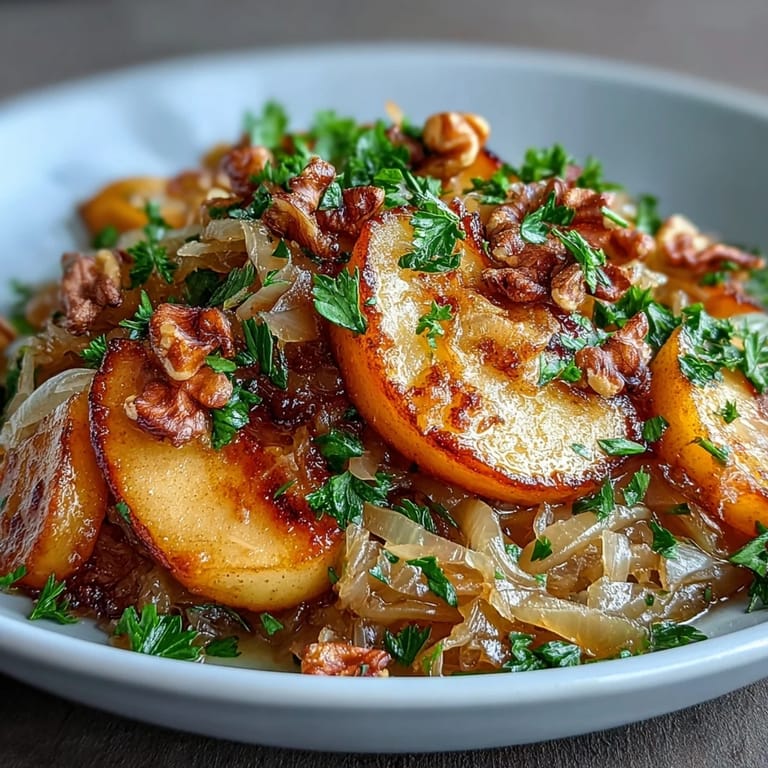
- Transfer everything to a platter or bowl while it's still warm, then scatter parsley and nuts on top. Serve immediately so you catch that perfect temperature where everything is still slightly warm but the sauerkraut hasn't lost its personality.
 Save to Pinterest
 My mom, who grew up eating traditional German food, tasted this and got this faraway look on her face, then said it reminded her of something her grandmother made but somehow easier and lighter. That moment when a dish connects across generations without trying too hard—that's when you know you've created something real.
Apple Varieties and What They Bring
Honeycrisp apples give you that natural sweetness and maintain their structure beautifully when cooked, while Gala offers a similar balance. If you want to go tart, Granny Smith apples will push the flavor toward the sauerkraut's funk, creating a more assertive, almost savory outcome. I've even used a mix of apples, which creates more flavor complexity—no single note dominates, and it feels more sophisticated somehow.
Making It a Complete Meal
On its own, this is a spectacular side dish alongside sausages or roasted chicken, but it's equally good as a light lunch when you add protein. Crumbled feta, smoked tofu, or leftover cooked kielbasa transforms it from side to main course, and the warmth of the skillet melds everything together beautifully without requiring additional cooking.
Storage and Second-Day Magic
This dish tastes different the next day, not in a bad way—the flavors meld and deepen as the apples soften slightly and the vinegar distributes itself more evenly throughout. Store it in an airtight container in the refrigerator for up to three days, and either reheat gently in a skillet or eat it at room temperature with fresh parsley sprinkled on top just before serving.
- Cold leftovers actually work wonderfully as a tangy side to grilled cheese or stirred into grain bowls for a flavor boost.
- If your sauerkraut tastes too strong on day two, that's the fermentation doing its job—it means those probiotics are thriving.
- Always add the fresh herbs right before eating, whether warm or cold, so they don't lose their brightness.
 Save to Pinterest
 This recipe lives in that beautiful space where comfort food and health-conscious cooking collide without any awkwardness. Make it once and you'll find yourself reaching for it again and again, especially when you want something warm, nourishing, and completely unpretentious.
Recipe FAQs
- → What type of apples work best?
Honeycrisp or Gala apples provide ideal sweetness and texture. Granny Smith adds extra tartness if you prefer a sharper contrast against the sauerkraut.
- → Can I make this ahead?
Yes, prepare the mixture and refrigerate for up to 2 days. Reheat gently in a skillet over medium-low heat, adding a splash of water if needed.
- → Is sauerkraut good for you?
Absolutely. Sauerkraut is rich in probiotics that support gut health, plus provides vitamin C and fiber. The fermentation process also makes nutrients more absorbable.
- → What pairs well with this skillet?
It complements grilled bratwurst, smoked sausage, or roasted pork loin. Also delicious alongside roasted potatoes or as a topping for savory German-style pancakes.
- → Can I add protein?
Certainly. Smoked tofu, kielbasa, or bratwurst slices can be added during the apple cooking stage. For plant-based protein, try white beans or chickpeas.
- → Why include caraway seeds?
Caraway seeds are traditional in German cuisine and pair naturally with cabbage dishes. Their subtle anise flavor enhances the sauerkraut without overpowering the apples.