 Save to Pinterest
 There's something about the way ginger steam rises from a simmering pot that makes everything feel manageable, even on the greyest winter afternoons. I discovered this soup almost by accident, really—I had a chunk of ginger sitting in my fridge and a craving for something that felt both light and deeply nourishing. What started as a quick improvisation became my go-to remedy whenever the cold settles in, the kind of soup that tastes like someone understands exactly what your body needs.
I made this for my sister during a particularly rough week, and watching her take that first spoonful and just close her eyes—that's when I knew this recipe was worth keeping. She asked for a second bowl before finishing the first, and when someone's that quiet about food, you know it's hitting right.
Ingredients
- Water or low-sodium vegetable broth (6 cups): The foundation matters here; if you use store-bought broth, taste it first because some brands are quite salty and will overwhelm the delicate flavors you're building.
- Fresh ginger (2-inch piece, thinly sliced): Don't peel it—the skin holds flavor and nutrients, plus those thin slices infuse the broth beautifully without becoming overwhelming.
- Garlic cloves (2, thinly sliced): Slice them thin so they soften into the broth rather than floating around whole; you want their essence, not their presence.
- White or yellow miso paste (2 tablespoons): This is your umami anchor and should be whisked into cooled broth off heat to preserve the live cultures that make miso special.
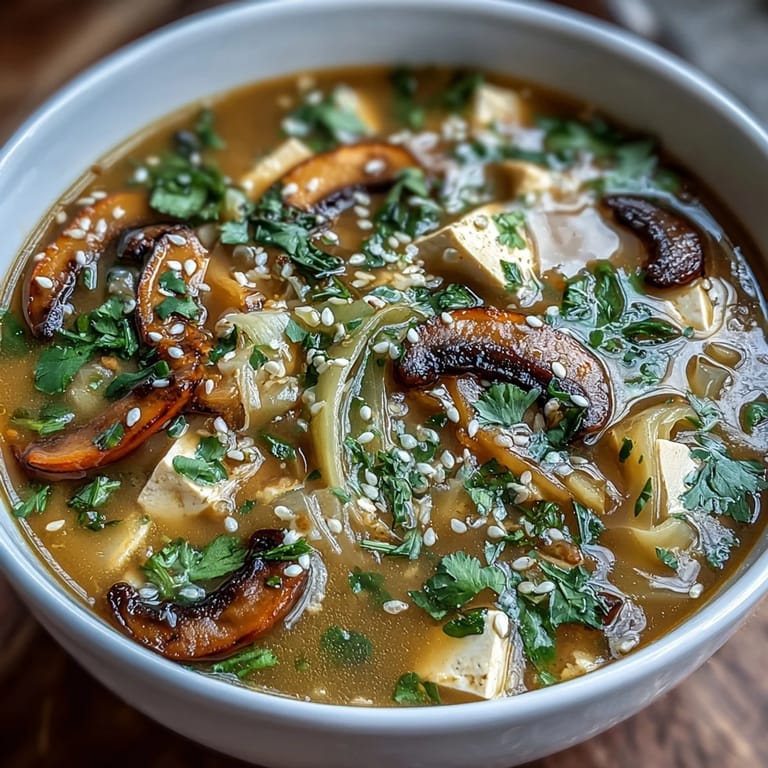
- Napa cabbage (1 cup, thinly sliced): It wilts down beautifully and adds a subtle sweetness that balances the ginger's heat.
- Carrot (1 medium, julienned): Cut into matchsticks so they cook through evenly and add little bursts of natural sweetness.
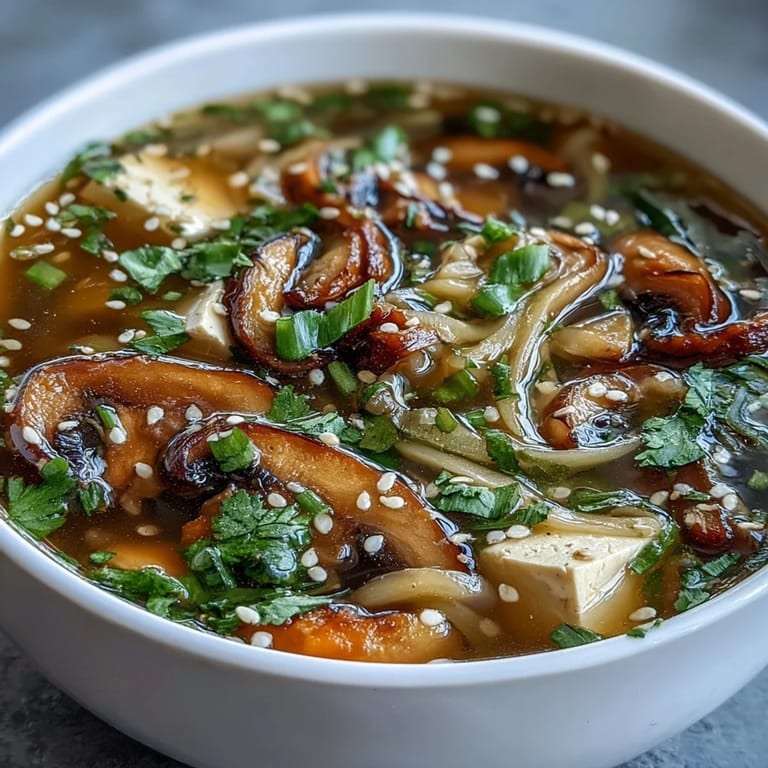
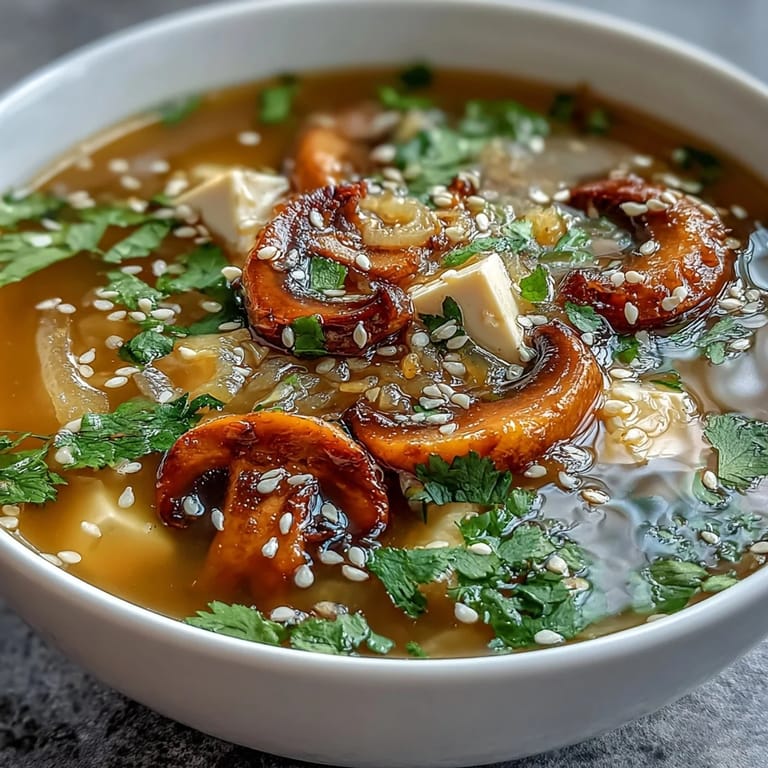
- Shiitake mushrooms (1 cup, sliced): These bring serious umami depth; if you can only find them pricey, a handful goes a long way because their flavor is concentrated.
- Scallions (2, sliced): Save these for garnish at the end so they stay bright and fresh with a little bite.
- Toasted sesame seeds (1 tablespoon): Toast them yourself if you have time; the difference between toasted and raw is the difference between background flavor and something memorable.
- Fresh cilantro or parsley (1 tablespoon, optional): Cilantro adds an almost citrusy note if that's your preference, but parsley keeps things understated.
- Chili oil or chili flakes (1 teaspoon, optional): This is personal—add just enough to feel the warmth without drowning out everything else.
- Silken tofu (200 g, cubed, optional): Use silken rather than firm so it stays delicate and absorbs the broth's flavor.
- Soba or rice noodles (100 g, cooked, optional): Cook them separately to your preferred texture so you control how soft they get in the soup.
Tired of Takeout? 🥡
Get 10 meals you can make faster than delivery arrives. Seriously.
One email. No spam. Unsubscribe anytime.
Instructions
- Bring your broth to a gentle simmer:
- Use a large pot so the soup has room to breathe, and keep the heat moderate—you want small, lazy bubbles rising to the surface, not an aggressive boil that'll cook off all the aromatics.
- Infuse with ginger and garlic:
- Add your thin slices and let them sit in the simmering broth for about 10 minutes; you'll notice the broth gradually turning golden and the kitchen filling with that distinctive warm, peppery aroma.
- Add your vegetables:
- Slide in the napa cabbage, carrot, and mushrooms, then let everything cook together for 5 to 7 minutes until the vegetables are just tender but still have a little life to them.
- Prepare your miso off heat:
- This step matters more than it sounds—remove the pot from heat, place your miso paste in a small bowl, and whisk in a ladle of the hot broth until it's completely smooth with no lumps. This prevents the miso from getting damaged by direct heat and keeps those beneficial probiotics intact.
- Stir the miso mixture back in:
- Pour it slowly into the pot while stirring gently, letting it disperse evenly throughout the broth without any temperature spikes.
- Add tofu and noodles if you're using them:
- Warm them through for just a couple of minutes—they've already been cooked, so you're just bringing them to temperature.
- Serve with garnishes:
- Ladle into bowls and let each person top their own soup with scallions, sesame seeds, herbs, and chili oil according to what speaks to them.
 Save to Pinterest
 What struck me most about this soup is how it's become a quiet tradition in my kitchen—something I make without overthinking it, the way you'd reach for a favorite sweater. It sits at this beautiful intersection of being easy enough for a Wednesday night but special enough to offer someone when they need tending to.
The Magic of Miso in Winter Cooking
Miso is one of those ingredients that transformed how I think about soup. Before understanding it better, I'd assumed it was just a salty paste you stirred in at the end, but it's actually a whole flavor system—fermented, alive, carrying complexity that no single seasoning could replicate. In winter specifically, when everything feels heavier and colder, miso's umami depth makes a simple broth feel substantial without being heavy.
Building Warmth Without Heaviness
The genius of this soup is that it warms you from the inside without leaving you feeling overstuffed or sluggish. The ginger does this thing where it spreads warmth through your body gradually, and the vegetables keep the whole thing feeling light and nourishing rather than indulgent. It's soup that respects your body while still tasting like care.
Variations and Personal Touches
Once you understand the structure of this soup, you can honestly build it however your fridge and mood suggest. I've made it with spinach instead of napa cabbage on nights when I was out of cruciferous vegetables, and it was equally good. The framework stays the same—ginger-infused broth, delicate vegetables, miso whisked in off heat—but the details shift based on what you have and what your body's asking for.
- Try swapping in bok choy or daikon radish for a different texture and flavor that still plays well with ginger.
- A dash of soy sauce or tamari stirred in alongside the miso adds another layer of umami if you want it deeper.
- If you're making this for someone who needs it to feel more substantial, the silken tofu and noodles transform it into something closer to a full meal.
 Save to Pinterest
 This soup has become my answer to a lot of quiet moments—mornings when I need gentleness, afternoons when the cold feels relentless, evenings when someone I care about needs feeding. It's proof that the simplest recipes, made with attention, can feel like the most generous ones.
Recipe FAQs
- → Can I freeze ginger miso soup?
Freezing is possible but may alter miso's probiotic benefits. For best results, freeze the vegetable broth base before adding miso, then stir in fresh miso when reheating.
- → What vegetables work best in this soup?
Napa cabbage, carrots, and shiitake mushrooms are traditional choices. Bok choy, spinach, daikon radish, or enoki mushrooms also work beautifully for variety.
- → Is this soup gluten-free?
The base is naturally gluten-free, but check your miso paste label as some brands contain barley or wheat. Use certified gluten-free miso and rice noodles instead of soba to accommodate dietary needs.
- → Can I use red miso instead of white?
White miso offers a milder, sweeter profile ideal for delicate broths. Red miso provides deeper, earthier intensity but may overpower the subtle ginger and vegetable flavors.
- → Why add miso after removing from heat?
High heat destroys miso's beneficial enzymes and probiotics. Whisking it into warm, not boiling, broth preserves these health benefits while preventing the paste from becoming grainy or bitter.