 Save to Pinterest
 There's something about coleslaw that catches people off guard. Everyone thinks they know what it is—just shredded cabbage drowning in mayo—but then you make one from scratch and suddenly they're asking for the recipe. I realized this one summer when a bowl of it I brought to a neighborhood cookout disappeared before the burgers were even done. That's when I understood: coleslaw isn't filler, it's the thing people actually came for.
I learned to make proper coleslaw after a picnic disaster where my hurried, watery version sat in a bowl and turned into sad cabbage soup. A friend's mom pulled me aside and showed me the trick: taste as you go, and let it sit so the cabbage softens just enough without getting mushy. Now I make it the night before, and every single time someone says 'this is the best coleslaw I've had.'
Ingredients
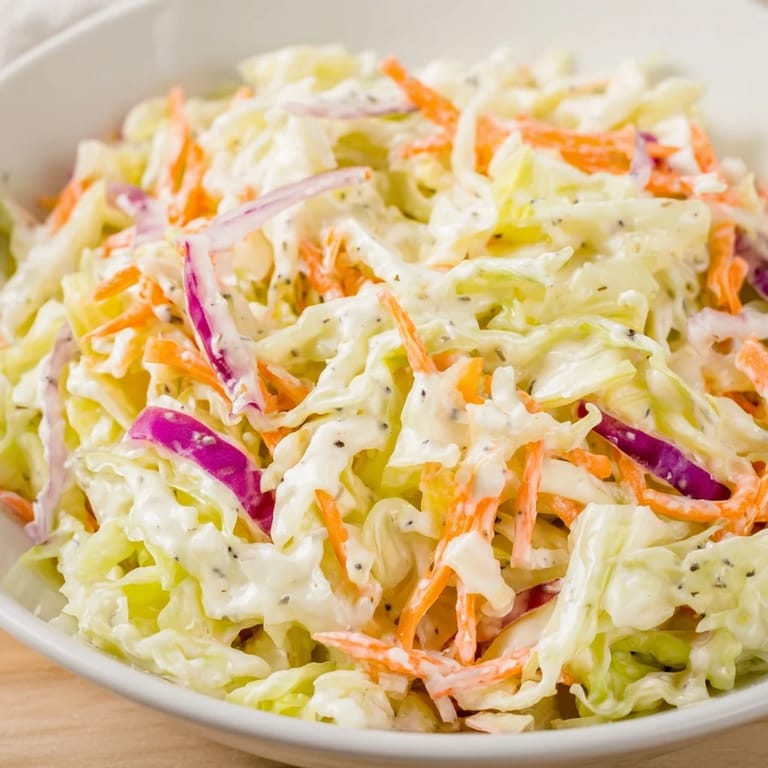
- Green cabbage, finely shredded: The backbone—use a sharp knife or mandoline to get those fine, delicate shreds that let the dressing coat everything evenly.
- Carrots, grated: They add sweetness and texture, plus that little pop of color that makes the bowl look alive.
- Red onion, finely sliced: Optional but worth it; they soften slightly in the dressing and add a subtle bite without overwhelming.
- Mayonnaise: This is your creamy base—don't skimp on quality here, it makes a real difference.
- Apple cider vinegar: The sharp backbone that keeps this from feeling heavy; it brightens everything up.
- Dijon mustard: Just enough tang and sophistication without making it taste mustard-y.
- Sugar: A small amount rounds out the flavors and balances the vinegar's bite.
- Celery seed, salt, and pepper: Celery seed adds a subtle depth that makes people wonder what they're tasting.
Tired of Takeout? 🥡
Get 10 meals you can make faster than delivery arrives. Seriously.
One email. No spam. Unsubscribe anytime.
Instructions
- Prep your vegetables:
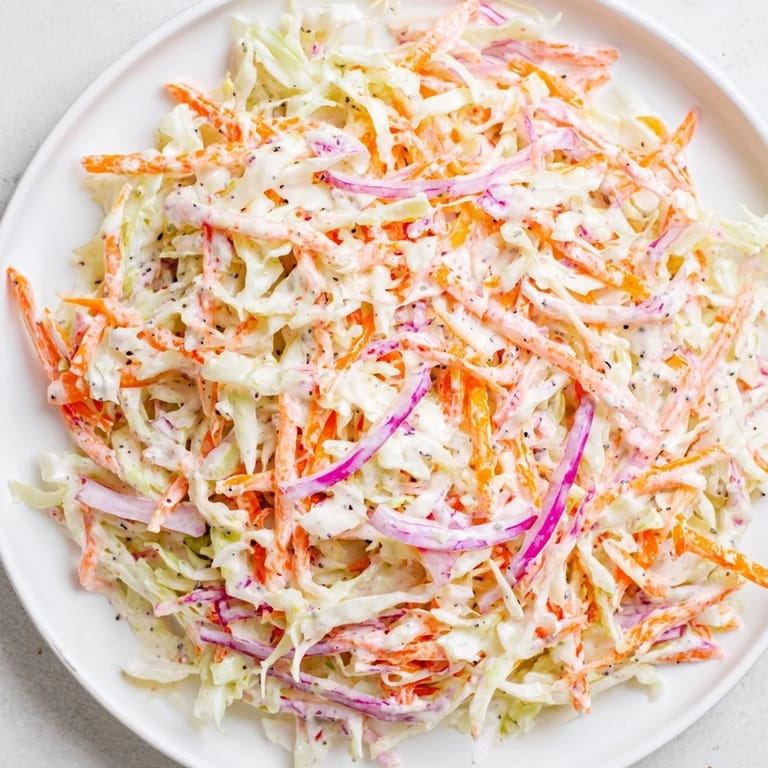
- Shred your cabbage until the pieces are thin and delicate—this is where a mandoline saves your knuckles and your sanity. Grate the carrots directly into the bowl and slice the red onion paper-thin so it softens beautifully in the dressing.
- Make the dressing:
- In a separate bowl, whisk the mayo, vinegar, mustard, and sugar together until completely smooth. This is the moment to taste it—you want that creamy-sharp balance to hit just right, so adjust your vinegar or sugar if it needs it.
- Bring it together:
- Pour the dressing over your vegetables and toss generously, making sure every strand of cabbage gets coated. Don't be shy—use both hands and really work it.
- Let it rest:
- Cover it and refrigerate for at least 30 minutes. This is when the magic happens; the cabbage softens and all those flavors meld into something better than the sum of its parts.
- Taste before serving:
- Give it another toss, taste a bite, and adjust salt and pepper as needed. The flavors can shift as it sits, so trust your palate.
 Save to Pinterest
 A friend once told me she'd never understood why people got excited about coleslaw until she tried mine at a barbecue. She was skeptical—'it's just cabbage and mayo'—but then she had a bite and went quiet. When someone stops mid-conversation to eat your food, you know you've done something right.
The Dressing Matters Most
This isn't a dish where you can just throw everything together and hope. The dressing is where all the character lives, and getting the ratio of mayo to vinegar to mustard right is what makes people come back for more. I've learned that the mayo should be creamy and rich, the vinegar should cut through clearly, and the mustard should whisper in the background rather than shout. Taste as you build it, adjust boldly, and you'll develop an instinct for what works.
Why Coleslaw Gets Better With Time
Unlike salads that get soggy and sad, coleslaw actually improves as it sits. The cabbage gradually softens, the dressing settles in, and flavors that seemed separate suddenly start talking to each other. I've noticed that coleslaw made the night before is almost always better than freshly made coleslaw. The texture becomes tender rather than crunchy, and the flavors deepen. Make it in advance whenever you can—it's one of those dishes that rewards patience.
Making It Your Own
The beauty of coleslaw is that it's a framework, not a law. Once you understand the balance of creamy dressing and crisp vegetables, you can play with it endlessly. Some nights I add sliced green onions or a handful of raisins for sweetness, other times I make it sharper with extra vinegar and less mayo. The formula stays the same, but the personality changes.
- For lighter coleslaw, swap half the mayo for Greek yogurt—it keeps the creaminess without feeling heavy.
- If you want it more vinegary and refreshing, use 60 ml olive oil instead of mayo and bump the vinegar up to 3 tablespoons.
- Fresh herbs like parsley or dill add brightness that people will taste but won't quite be able to name.
 Save to Pinterest
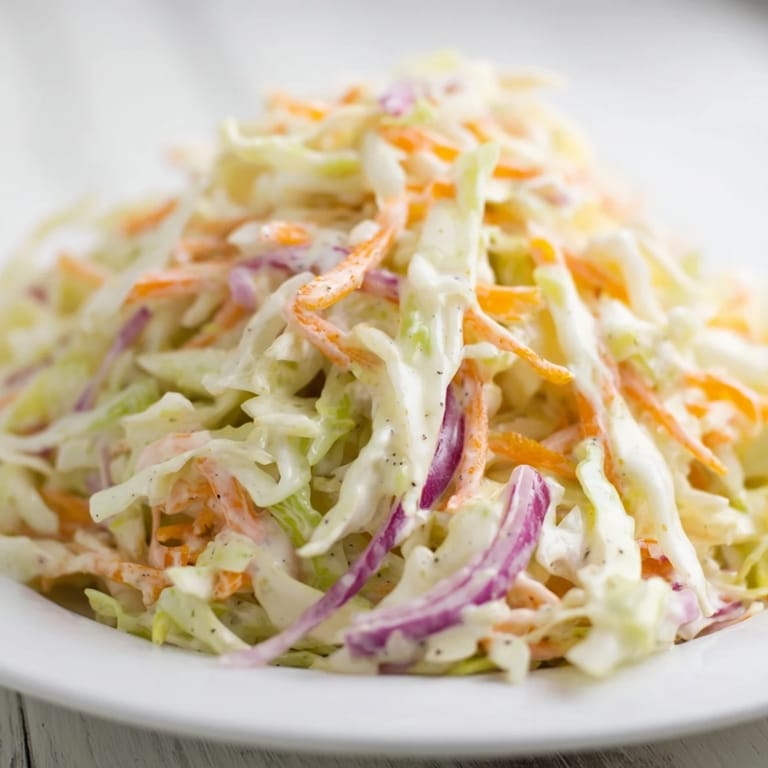
 Coleslaw taught me that the simplest dishes are often the ones that shine brightest. There's no pretense, no hiding behind technique—just good ingredients treated with respect. Serve it cold, serve it with confidence, and watch what happens.
Recipe FAQs
- → What type of cabbage is best for this salad?
Green cabbage works best due to its crisp texture and mild flavor, making it ideal for shredding in this salad.
- → Can I prepare the salad in advance?
Yes, refrigerate the salad for at least 30 minutes, or up to one day, to allow the flavors to meld nicely.
- → How can I make the dressing lighter?
Substitute half the mayonnaise with Greek yogurt or replace mayonnaise altogether with olive oil and increase vinegar for a lighter dressing.
- → Are there optional ingredients that enhance flavor?
Adding finely sliced red onion, green onions, chopped parsley, or a handful of raisins can provide extra depth and sweetness.
- → What tools help with preparation?
A large mixing bowl, whisk, chef’s knife or mandoline, and vegetable peeler make shredding and mixing easier and efficient.