 Save to Pinterest
 My grandmother's kitchen smelled like vanilla and butter on the day she first taught me her banana pudding. She didn't follow a recipe—just knew how many eggs, how long to stir, when the custard was ready by the sound it made against the spoon. What struck me wasn't the technique but how she'd pause between layers, admiring the way the bananas caught the light, like she was building something meant to be remembered. That afternoon, I learned that banana pudding isn't just dessert; it's a conversation between texture and time.
I made this for a potluck one August evening, and someone's aunt—a woman I'd never met—came back for thirds and asked if I'd share the recipe. We ended up talking for twenty minutes about Southern food, about how desserts like this one carry stories. She told me her version had a meringue top, that her mother swore by it. By the end of the night, the bowl was empty, and I had a new friend.
Ingredients
- Granulated sugar (3/4 cup): This sweetens the custard base and dissolves completely into the milk, creating that smooth, creamy foundation everything else rests on.
- Cornstarch (1/4 cup): The secret to a pudding that's thick but not gluey—it thickens without curdling like flour might, and I've learned to whisk it with the sugar first so it doesn't clump.
- Salt (1/4 tsp): A small pinch that makes the vanilla sing and balances the sweetness in a way you won't notice until it's missing.
- Whole milk (3 cups): Don't use skim—the fat is what makes this creamy and luxurious, and it's the whole reason we're here.
- Egg yolks (4 large): These turn a simple milk mixture into custard, and tempering them keeps them from scrambling into little flecks.
- Unsalted butter (2 tbsp): Stirred in at the end, it adds richness and a whisper of flavor that ties everything together.
- Vanilla extract (2 tsp): Use real vanilla—the good stuff—because it's what people taste first when they eat this.
- Vanilla wafers (one 340g box): About 45 to 50 cookies that soften beautifully as they sit, becoming almost cake-like but holding their shape.
- Ripe bananas (4 medium): Sliced fresh, they stay bright and flavor-forward; slice them no more than an hour or two before assembling so they don't brown.
- Heavy cream (1 cup): Whipped into peaks, it's light and clouds the top layer with elegance.
- Powdered sugar (2 tbsp): Whipped into the cream, it stays stable longer than granulated sugar would.
Tired of Takeout? 🥡
Get 10 meals you can make faster than delivery arrives. Seriously.
One email. No spam. Unsubscribe anytime.
Instructions
- Make the base:
- In a medium saucepan, whisk together the sugar and cornstarch with your salt—this step prevents lumps. Gradually pour in the milk while whisking, and you'll watch the mixture go from lumpy to smooth; this is exactly what you want.
- Cook the custard:
- Set the pan over medium heat and stir constantly. After about 6 to 8 minutes, the mixture will thicken and just start to bubble at the edges—you'll smell it before you see it, a warm vanilla-tinged aroma. Don't walk away; keep your whisk moving.
- Temper the yolks:
- Lightly beat your egg yolks in a separate bowl. Here's where patience matters: slowly whisk about half a cup of that hot milk mixture into the yolks while whisking constantly, so they warm up gradually instead of cooking into scrambled eggs. Then pour that yolk mixture back into the saucepan, still whisking.
- Finish the pudding:
- Cook for another 2 to 3 minutes, stirring the whole time, until it's thick and smooth. You'll feel it coat the back of a spoon, and if you run your finger across it, the line stays put. Remove from heat, stir in the butter and vanilla until they vanish into the pudding.
- Cool and chill:
- Pour the pudding into a bowl and press plastic wrap right onto its surface so no skin forms. Let it cool to room temperature, then refrigerate for about an hour until it's properly chilled and ready to build with.
- Layer with intention:
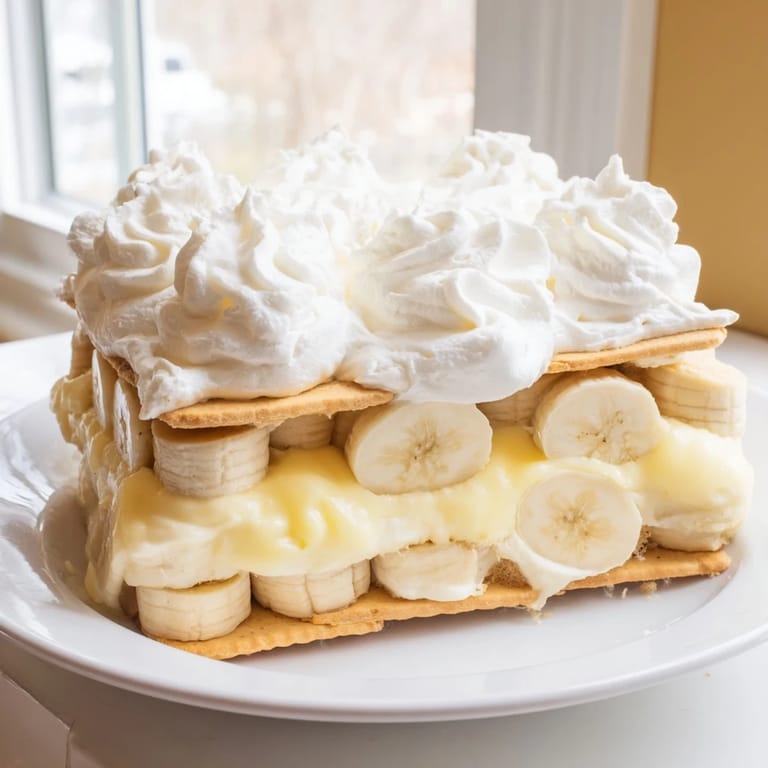
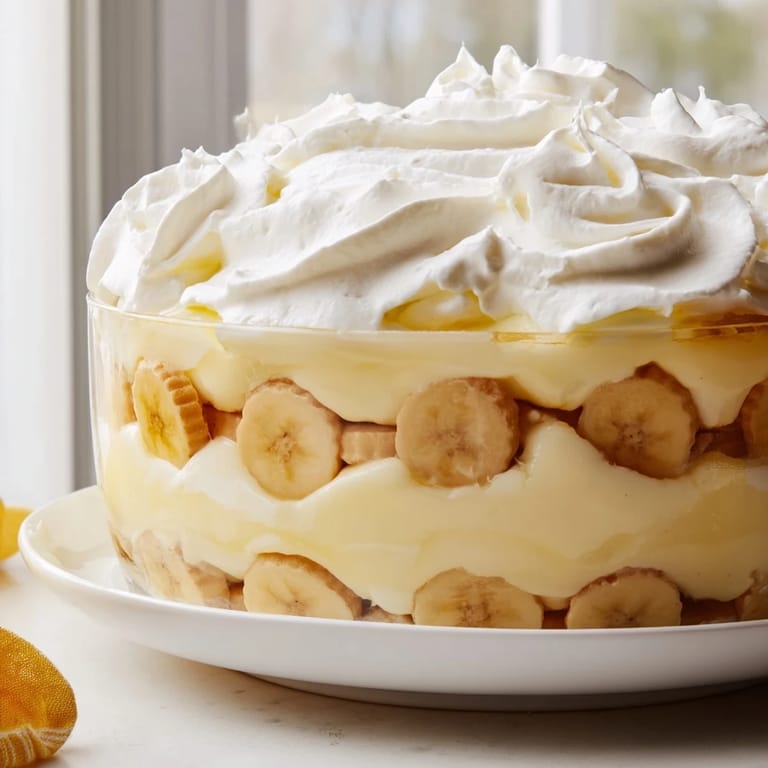
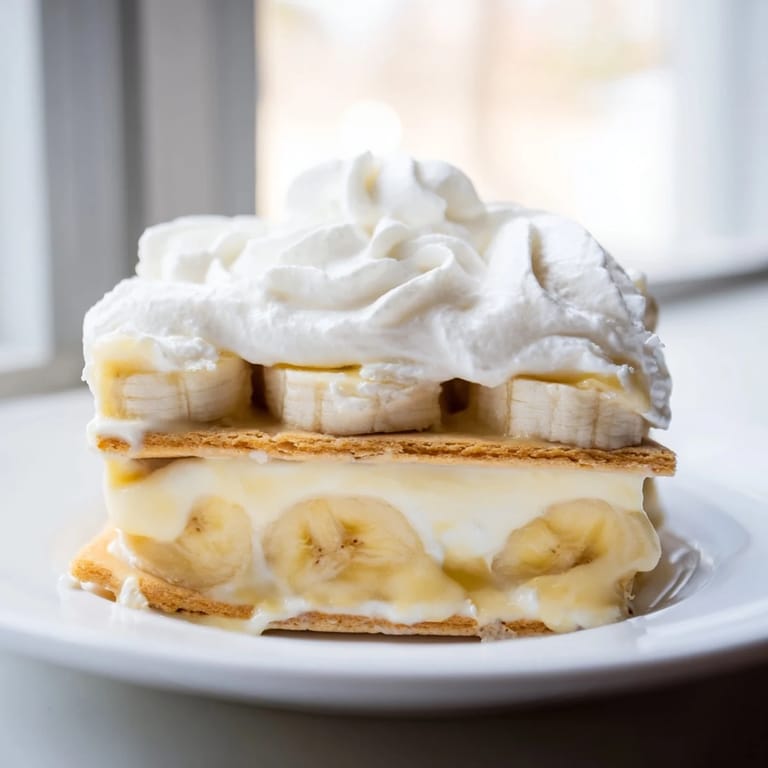
- In a 2 to 2.5-quart serving dish or trifle bowl, place one-third of the wafers on the bottom, then one-third of the banana slices, then one-third of the pudding. Repeat this twice more, so you end with pudding on top. Cover and refrigerate for at least 2 hours so the flavors start knowing each other.
- Top just before serving:
- Whip the heavy cream with powdered sugar and vanilla extract until soft peaks form—fluffy clouds that hold their shape but still feel soft to the spoon. Spread or pipe this over the top layer of pudding, and if you like, add a few extra wafers or banana slices for garnish.
 Save to Pinterest
 I watched my daughter taste this pudding for the first time, and her face changed—eyes wide, fork pausing midway to her mouth. She asked, in that serious way kids do, if we could make it again tomorrow. We didn't, but we did the week after, and now it's become our thing, the dessert we make when we want to feel like we're sitting in my grandmother's kitchen all over again.
Why This Matters
Banana pudding lives in a sweet spot between effort and reward. You're not fighting temperamental dough or timing multiple components—you're simply making a custard, layering it with bananas and cookies, and letting time do the rest of the work. There's something almost meditative about whisking, about watching starch and egg transform milk into something velvet-soft. And when it comes together, when someone takes that first bite and their face softens, you understand why this dessert has been passed down for generations.
The Art of the Layer
The beauty of banana pudding is that it's forgiving in its architecture. Whether you use a trifle bowl and go for drama or a simple rectangular dish and keep it humble, the method is the same: wafers, bananas, pudding, repeat. Some people crush the bottom wafers intentionally, creating a more cohesive structure; others keep them whole for textural contrast. I've found that neither approach is wrong—it comes down to what you're after. The pudding will soak in and soften everything just enough, and after 2 hours in the refrigerator, the flavors begin to marry in ways they couldn't while everything was separate.
Variations and Extensions
This recipe is a starting point, not a rule. I've seen it built with a meringue topping instead of whipped cream—spread whipped egg whites over the pudding and bake at 350°F until lightly golden, and you'll have something closer to a pie. Others use half the amount of pudding and add a layer of crushed vanilla wafers mixed with melted butter for textural depth. The best versions are the ones you adapt to what you have and what you love.
- For a lighter version, swap in low-fat milk and light whipped topping, and it loses almost nothing in the translation.
- Dust the final layer with a few crushed wafers just before serving for a crispy top that won't soften.
- Add a splash of rum or bourbon to the pudding if you want to serve it to adults—it whispers rather than shouts.
 Save to Pinterest
 Banana pudding is more than a recipe—it's an excuse to slow down and make something with your hands that feels both simple and special. Make it for people you want to impress or for yourself on a quiet afternoon, and let it remind you why these old recipes stick around.
Recipe FAQs
- → How do I achieve the perfect pudding consistency?
Constantly whisk the mixture over medium heat until it thickens and bubbles gently, then temper the egg yolks with hot milk before combining to avoid curdling.
- → What is the best way to layer the dessert?
Alternate layers starting with vanilla wafers, then banana slices, and pudding, repeating until all components are used, finishing with a top pudding layer.
- → Can I prepare this dessert ahead of time?
Yes, assemble and refrigerate it for at least 2 hours or up to 24 hours for flavors to meld and texture to improve.
- → What toppings work well besides the whipped cream?
Lightly toasted meringue or extra vanilla wafers and banana slices add texture and visual appeal without overpowering flavors.
- → Are there any ingredient substitutions for a lighter version?
Using low-fat milk in the pudding and a light whipped topping can reduce richness while maintaining flavor.