 Save to Pinterest
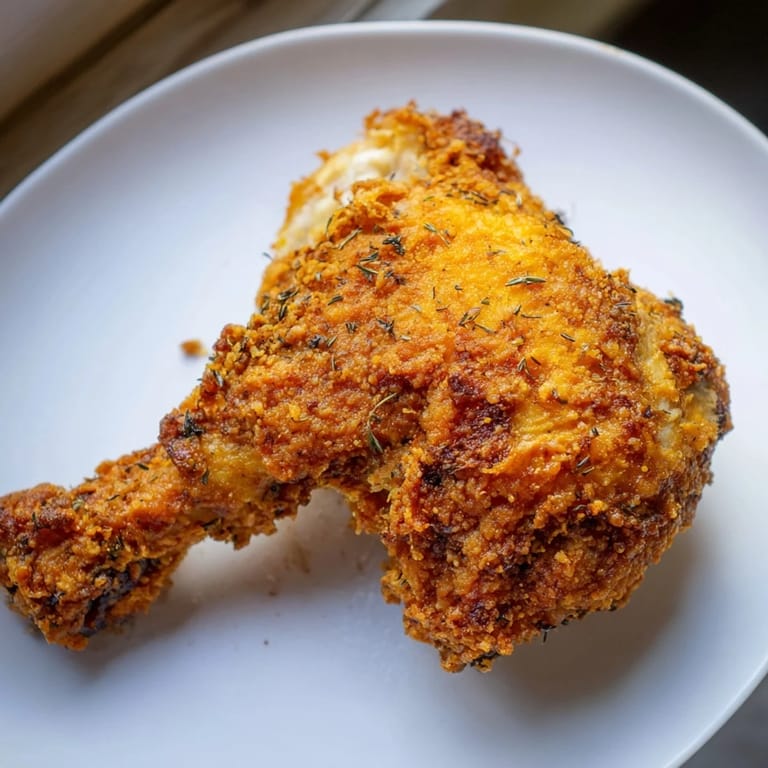
 There's something about the sound of chicken hitting hot oil that still makes me pause whatever I'm doing. My grandmother used to fry chicken on Sunday afternoons, and the whole neighborhood seemed to smell it at once. I spent years trying to replicate that golden, crackling exterior and impossibly tender meat, learning along the way that buttermilk isn't just a shortcut—it's the secret that transforms ordinary chicken into something people remember. Now when I make it, I think about those lazy afternoons and how food that simple can mean so much.
I made this for a dinner party once where nothing else was working out—the timing was off, I'd burned something earlier—and I almost canceled. But then I decided to just fry chicken, set out some simple sides, and let people relax. Three hours later, everyone was still there, picking at bones and asking for the recipe. It taught me that sometimes the best meals aren't complicated; they're just made with care and maybe a little bit of courage.
Ingredients
- Chicken (1.2 kg, about 8 pieces): Skin-on drumsticks and thighs work best because they stay moist—avoid breasts unless you love them, as they dry out faster.
- Buttermilk (240 ml): This is non-negotiable; the acidity tenderizes the meat while the coating on the buttermilk creates that tender interior that contrasts with the crust.
- All-purpose flour (240 g): The foundation of your coating—it needs to stick to the buttermilk and brown evenly in the oil.
- Garlic powder (2 tsp), onion powder (1 tsp), dried thyme (1 tsp): These three are the flavor trinity; they layer into something more interesting than salt and pepper alone.
- Smoked paprika (1 tsp): This ingredient changed everything for me—it adds color and a subtle depth that makes people ask what your secret is.
- Vegetable oil (1 liter): You need enough volume to maintain temperature as the chicken cooks; too little oil and the temperature drops, leaving you with greasy chicken.
Tired of Takeout? 🥡
Get 10 meals you can make faster than delivery arrives. Seriously.
One email. No spam. Unsubscribe anytime.
Instructions
- Mix the marinade:
- Whisk buttermilk with salt, black pepper, paprika, and cayenne into a large bowl. The mixture should smell bright and sharp. Submerge the chicken pieces, making sure every surface touches the buttermilk, then cover and refrigerate for at least 2 hours or overnight if you can wait.
- Prepare the coating:
- In a separate bowl, combine flour, garlic powder, onion powder, thyme, smoked paprika, salt, and pepper. Stir until the spices are evenly distributed and the mixture is uniform in color—no streaks of paprika.
- Dredge the chicken:
- Lift each piece from the buttermilk, let excess drip back into the bowl, then roll it in the flour mixture, pressing gently so the coating adheres. Set each piece on a wire rack and repeat with all the chicken.
- Let it rest:
- Leave the coated chicken on the rack for 10 minutes at room temperature. This lets the flour set so it won't fall off in the oil—I learned this the hard way after losing half my coating on my first attempt.
- Heat the oil:
- Pour oil into your pot or fryer and clip a thermometer to the side. Bring it to 175°C (350°F), checking the temperature constantly as it rises. When it reaches temperature, it's ready—don't rush this step.
- Fry in batches:
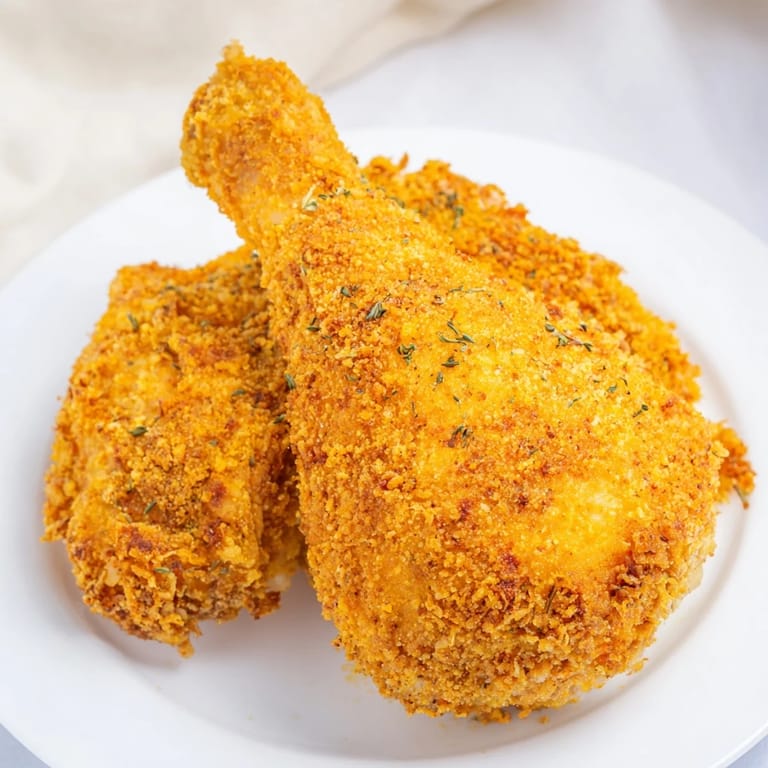
- Gently lower chicken pieces into the hot oil, working in batches so you don't crowd the pot and drop the temperature. The oil should sizzle and bubble immediately. Fry for 12–15 minutes, turning pieces halfway through, until they're deep golden brown and a thermometer inserted into the thickest part reads 75°C (165°F).
- Drain and rest:
- Transfer the finished chicken to a wire rack (not paper towels, which trap steam) and let it rest for 5 minutes. This keeps the bottom crispy instead of steaming into softness.
 Save to Pinterest
 The real moment this dish became meaningful to me was watching someone who usually picked at food take a second piece without asking, then a third. We didn't talk much that night, but there was something about sharing food that didn't need explanation. That's when I understood that fried chicken isn't just dinner—it's a language.
Why This Method Works
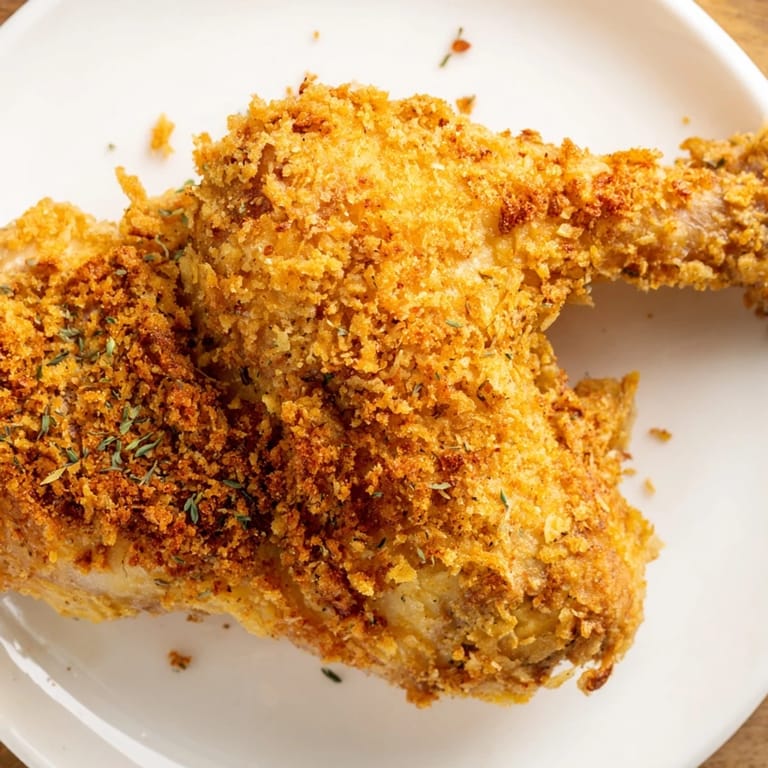
The buttermilk marinade is doing two things at once: the lactic acid is breaking down the chicken's proteins so it stays tender even after frying, and the dairy coating helps create a protective layer in the oil. The double-dredge technique—flour, then buttermilk, then flour again—gives you that audible crunch when you bite into it. I used to think I needed fancy techniques, but I realized the real skill is understanding why each step exists.
Timing and Prep
The beauty of this recipe is that most of the work happens while you're doing something else. Marinate the chicken overnight or while you're at work, then the actual cooking takes less than 30 minutes. I like to prepare my coating mixture right before I start frying so it's still fresh and the spices haven't started settling. Set up a station with your marinated chicken, your flour mixture, your rack, and your oil, and everything flows naturally from there.
Serving and Storage
Fried chicken is best eaten warm, but it's honestly just as good cold the next day if you have any left. Pair it with coleslaw for brightness, mashed potatoes for comfort, or hot sauce if you like heat. Store leftovers in an airtight container in the refrigerator for up to 3 days, and reheat them in a 200°C oven for 10 minutes to restore some of the crispness.
- Let the chicken cool completely before storing so condensation doesn't make the coating soggy.
- For meal prep, you can marinate the chicken for up to 24 hours and freeze the coated pieces before frying.
- Serve on a platter with lemon wedges for brightness and to cut through the richness.
 Save to Pinterest
 This chicken has taught me more about cooking than I expected—about patience, temperature, and how the simplest food cooked well can be the most meaningful. Make it for people you care about.
Recipe FAQs
- → How can I achieve extra crispy chicken?
For an extra crispy crust, double-dip the chicken after the initial flour coating by dipping it back into buttermilk and then flour again before frying.
- → What oil is best for frying chicken?
Vegetable oil with a high smoke point works well for frying, ensuring even cooking and a crispy exterior without burning.
- → How long should the chicken marinate?
Marinating for at least 2 hours is recommended, but overnight marination yields deeper flavor and more tender meat.
- → Can I use boneless chicken pieces?
Yes, boneless chicken pieces can be used, but reduce frying time accordingly to avoid overcooking.
- → How do I know when the chicken is cooked through?
Fry until the chicken is golden brown and the internal temperature reaches 75°C (165°F) to ensure it is safely cooked.