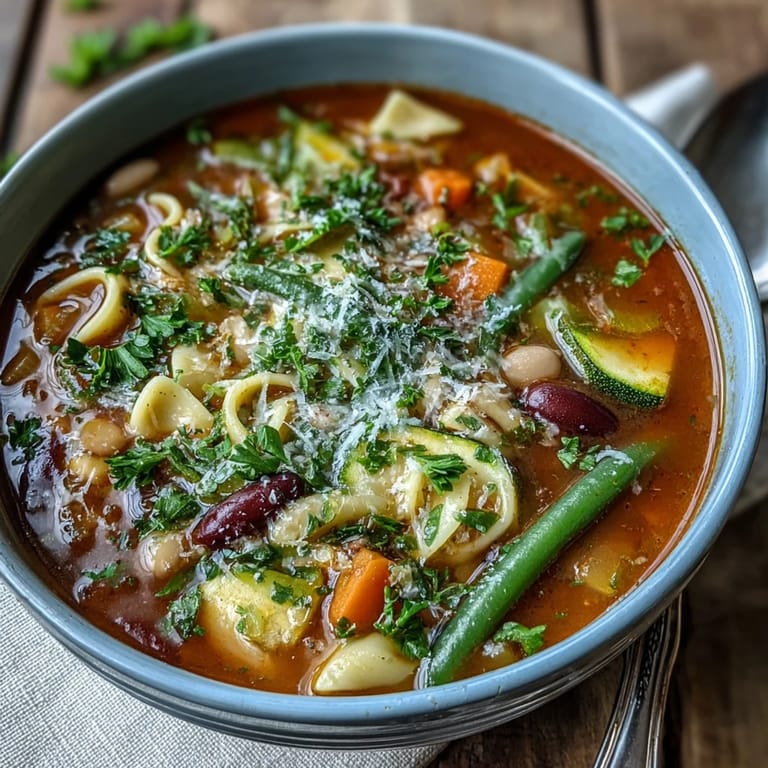
 Save to Pinterest
 I used to think soup was just a side dish until a heavy rainstorm trapped me in my kitchen with a half empty pantry. I started chopping whatever was in the crisper drawer and the rhythm of the knife on the wood felt incredibly soothing. By the time the broth was bubbling the windows had fogged up and the whole house smelled like an Italian garden. This minestrone was born from that quiet afternoon of making do with what I had. It turned out to be the most comforting meal I had cooked all year.
Last winter I made a giant pot of this for my neighbors during a power outage. We sat around by candlelight passing around a single loaf of bread and laughing about our cold toes. The soup stayed warm in my heavy ceramic pot and provided exactly the kind of fuel we needed. It was one of those rare moments where simple food felt like a grand feast.
Ingredients
- Olive oil: High quality oil adds a silky mouthfeel to the vegetable base.
- Onion: Dicing this small ensures it melts into the broth for subtle sweetness.
- Carrots: These provide a bright pop of color and a necessary earthy crunch.
- Celery: Never skip these because they provide the aromatic backbone of the soup.
- Garlic: Mincing it fresh makes a world of difference compared to the jarred kind.
- Zucchini: I love how these soak up the tomato broth while staying tender.
- Green beans: They add a nice snap and texture that breaks up the soft beans.
- Spinach: This wilts down into silky ribbons that make every bite feel healthy.
- Diced tomatoes: Use the juices from the can to add extra acidity and body.
- Vegetable broth: Choosing a low sodium version lets you control the final saltiness.
- Dried herbs: Rubbing them between your palms before adding awakens their hidden oils.
- Bay leaf: This humble leaf adds a tea like depth that you would miss if it were gone.
- Pasta: Small shapes like ditalini stay on the spoon much better than long noodles.
- Cannellini beans: These are wonderfully creamy and add a lot of plant based protein.
- Red kidney beans: Their sturdy skins provide a great contrast to the softer ingredients.
Tired of Takeout? 🥡
Get 10 meals you can make faster than delivery arrives. Seriously.
One email. No spam. Unsubscribe anytime.
Instructions
- Saute the base:
- Warm the oil and let the onions and carrots soften until they look glassy. This step builds the foundation of flavor that carries through the whole dish.
- Soften the greens:
- Add the garlic and zucchini and stir them quickly so nothing burns. You want them to just start picking up a little color from the pot.
- Build the broth:
- Pour in the tomatoes and broth then toss in those fragrant dried herbs. Bring everything to a lively boil before turning it down to a gentle simmer.
- Simmer and blend:
- Cover the pot and let those vegetables get to know each other for fifteen minutes. The kitchen will start to smell like a dream at this point.
- Cook the pasta:
- Stir in the beans and pasta and keep the lid off so the liquid reduces slightly. Watch the timer so the pasta stays firm and does not turn into mush.
- Final wilt:
- Toss in the spinach and watch it disappear into the hot liquid in seconds. Give it one last stir and pull out that bay leaf before serving.
 Save to Pinterest
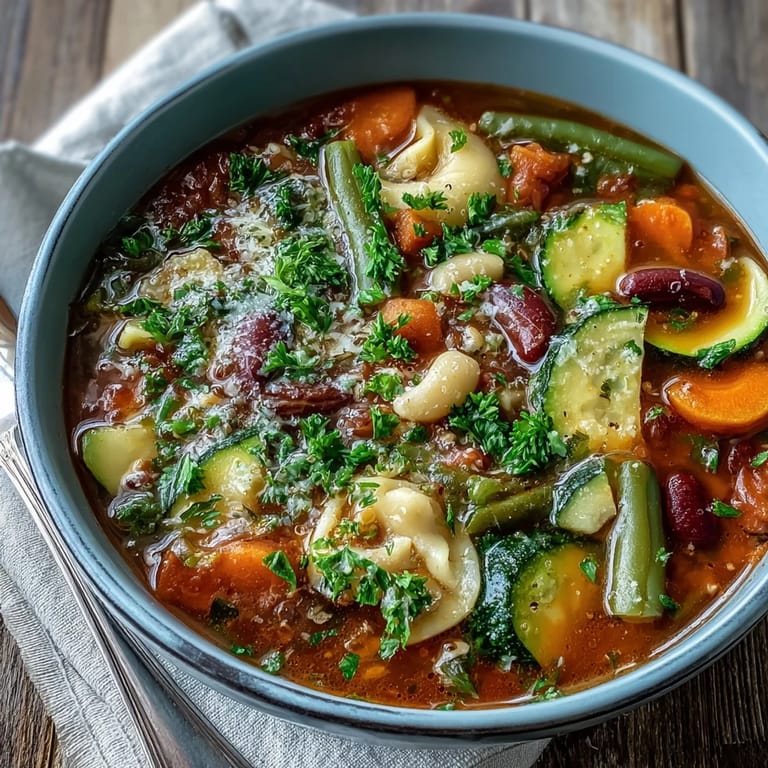
 My grandmother always told me that the secret was the Parmesan rind she kept in the freezer. I remember watching her drop that hard piece of cheese into the pot like a magic charm. Now I do the same and it brings back the sound of her humming while she stirred. It is funny how a single ingredient can carry so much weight from the past.
The Seasonal Swap
You can easily change the vegetables based on what the farmers market has on any given Saturday. In the spring I often swap the beans for fresh peas and use asparagus instead of zucchini. In the fall a few cubes of butternut squash make the whole bowl feel much more substantial. Just remember to adjust the cooking time for harder vegetables so they end up tender. This flexibility is exactly why this recipe stays in my weekly rotation.
The Perfect Topping
While the soup is great on its own the garnishes are where you can really have some fun. A heavy hand with the Parmesan cheese adds a salty bite that balances the sweet tomatoes. I always finish my bowl with a very generous drizzle of extra virgin olive oil right at the table. A squeeze of fresh lemon juice can also brighten the flavors if the soup feels a bit heavy. Fresh parsley adds a grassy note that makes the whole dish taste like it was just picked from the garden.
Keeping Things Fresh
This soup actually tastes much better the next day after the spices have had time to settle. I often make a double batch on Sunday so I have quick lunches ready for the busy work week. Just be sure to store it in airtight containers to keep the flavors locked in tight.
- Keep the pasta in a separate container if you hate soggy noodles.
- Reheat it slowly on the stove rather than using the microwave for the best texture.
- Add a splash of water or extra broth if the soup has thickened too much in the fridge.
 Save to Pinterest
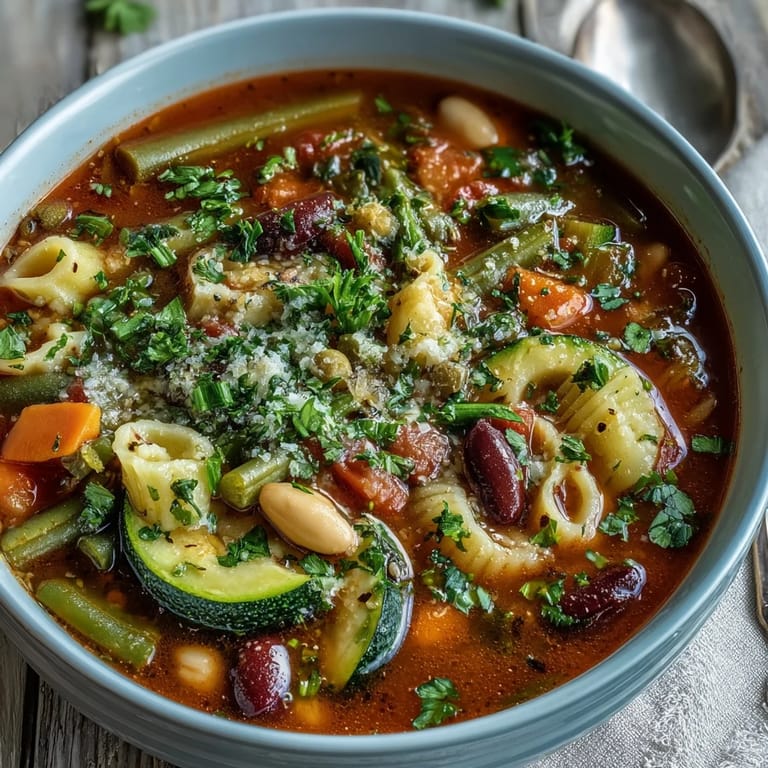
 I hope this soup brings as much warmth to your kitchen as it has to mine over the years. Pour a glass of wine and take your time enjoying every vegetable packed spoonful.
Recipe FAQs
- → Can I make minestrone soup in advance?
Absolutely! Minestrone tastes even better the next day as flavors have time to develop. Store in the refrigerator for up to 4 days, adding a splash of broth when reheating since pasta absorbs liquid.
- → What vegetables work best in minestrone?
Traditional options include carrots, celery, onions, zucchini, green beans, and leafy greens like spinach or kale. You can also add potatoes, cabbage, or peas depending on what's in season.
- → Can I freeze minestrone soup?
Yes, freeze for up to 3 months. For best results, slightly undercook the pasta since it will continue softening when reheated. Thaw overnight in the refrigerator before warming.
- → Is minestrone suitable for vegetarian diets?
This version is vegetarian using vegetable broth. For vegan, simply omit the Parmesan garnish or use a plant-based alternative. The soup provides protein from two types of beans.
- → What pasta shape is traditional for minestrone?
Small pasta shapes like ditalini, elbow macaroni, or small shells work best. They're easy to scoop with a spoon and hold up well in the broth without becoming mushy.
- → How can I make minestrone gluten-free?
Simply substitute the regular pasta with gluten-free pasta shapes. All other ingredients are naturally gluten-free, making this an easy adaptation for dietary needs.