 Save to Pinterest
 My dad used to make beef pot roast every Sunday during winter, and the smell of it braising in the oven would drift through the entire house by mid-afternoon. I'd wander into the kitchen more than once, drawn by that deep, savory aroma, and he'd always let me peek under the lid to watch the beef break apart at the gentlest nudge of a spoon. Years later, I realized that what made his version so good wasn't any secret ingredient—it was simply patience and the kind of attention that comes from cooking for people you love. Now when I make it, I'm not just recreating a dish; I'm recreating that feeling of anticipation and warmth.
I made this for my wife's family the first time she brought me home, and I was terrified I'd oversalt it or somehow ruin the gravy. Spoiler: everything turned out fine, and her grandmother asked for the recipe—which felt like a quiet blessing. Since then, it's become the dish I make whenever someone needs real comfort food, the kind that sits warm in your stomach and makes you feel looked after.
Ingredients
- Chuck roast (3 to 4 lbs): This cut has enough marbling to stay moist through long cooking; avoid leaner cuts like sirloin that can dry out in the oven.
- Kosher salt and black pepper: These are your foundation—don't skip seasoning the meat well before it hits the pan.
- Olive oil: High heat searing requires oil with a high smoke point; this browns the meat properly and builds flavor.
- Yukon Gold or Russet potatoes: Yukon Golds stay creamy, while Russets break down slightly and thicken the gravy naturally.
- Carrots and onions: These become sweet and soft during braising, almost dissolving into the gravy if you like them that way.
- Garlic: Smashing it releases the oils without overwhelming the dish; whole cloves would be too harsh.
- Beef broth: Use good quality broth—it's the backbone of your gravy, so it matters more than you'd think.
- Red wine (optional): It adds depth and acidity that brightens the richness; if you skip it, your gravy will be slightly sweeter.
- Tomato paste: This concentrate adds umami and complexity without tasting like tomato.
- Worcestershire sauce: A splash brings savory depth that no single ingredient can replicate.
- Thyme and bay leaves: These herbs work quietly in the background, letting the beef flavor shine through.
- Flour or cornstarch: Choose based on your dietary needs; cornstarch thickens faster and gives a glossier finish.
Tired of Takeout? 🥡
Get 10 meals you can make faster than delivery arrives. Seriously.
One email. No spam. Unsubscribe anytime.
Instructions
- Preheat and prep:
- Set your oven to 300°F and pat your beef completely dry with paper towels—moisture on the surface prevents a proper brown crust. Season generously with salt and pepper on all sides; this is your only chance to flavor the meat throughout.
- Sear the beef:
- Heat oil in your Dutch oven until it shimmers, then lay the roast down carefully. Don't move it for a full 4 to 5 minutes—you're building a golden crust that locks in juices and adds flavor. Flip and repeat on the other side, then set the beef aside on a clean plate.
- Build the base:
- Toss in your onions and garlic, scraping up all those brown bits stuck to the pot. After a couple minutes, when everything smells amazing and the onions are softening, stir in tomato paste and let it cook for just a minute until it darkens slightly and becomes fragrant.
- Deglaze and combine:
- Pour in your wine slowly, stirring and scraping as it sizzles—this pulls up all the caramelized flavor clinging to the bottom. Let it simmer for a minute or two, then add your beef broth, Worcestershire, thyme, and bay leaves.
- Arrange and braise:
- Return the beef to the pot nestled in the liquid, then arrange your potatoes and carrots around it like you're tucking them in. Cover tightly and slide the whole thing into the oven for 3 to 3.5 hours, until the beef yields instantly to a fork and the vegetables have softened completely.
- Make the gravy:
- Remove the beef and vegetables to a serving platter, then skim the excess fat from the surface with a spoon. Whisk your flour or cornstarch with cold water until completely smooth—no lumps—then stir it into the hot liquid on the stovetop over medium heat, whisking constantly until it thickens into a silky gravy, about 3 to 5 minutes.
- Finish and serve:
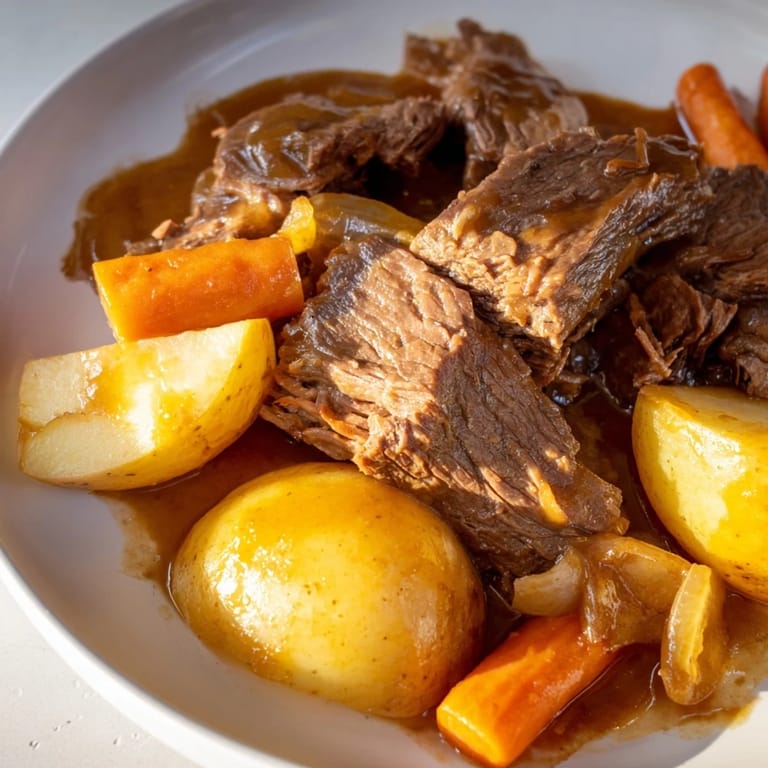
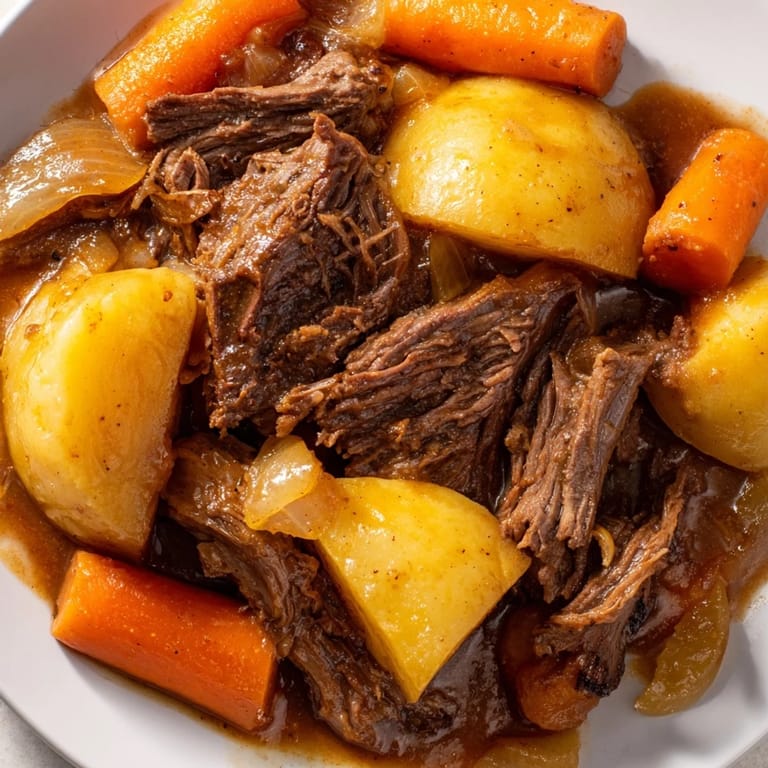
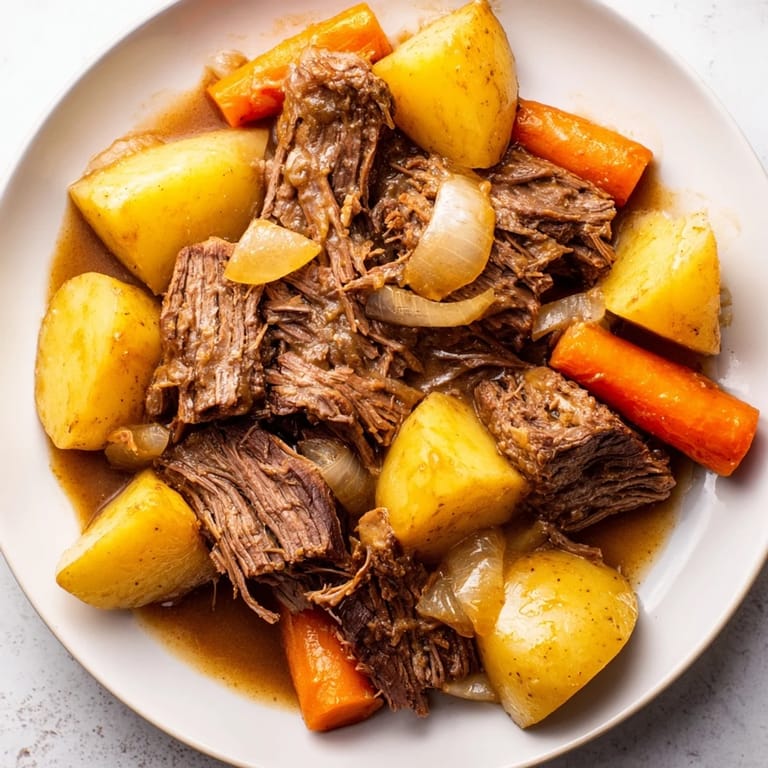
- Slice your beef, arrange it with the vegetables, and pour that rich gravy over everything. Serve immediately while everything is still warm and steaming.
 Save to Pinterest
 My daughter once asked why this dish took so long to make when everything else we cooked was faster, and I realized I didn't have a good answer except that good things take time. Now she's the one who requests it when she's had a hard week, and she'll sit at the counter while I cook, asking questions about why we do things a certain way. That's when I understood this recipe isn't just about feeding people—it's about creating moments where cooking and conversation happen at the same pace.
Why Low and Slow Matters
Pot roast is one of those rare dishes where the cooking method is almost more important than the ingredients themselves. The low oven temperature breaks down the connective tissues in the beef gradually, turning a tough cut into something that practically melts on your tongue. I've tried rushing it at higher heat, and the beef comes out dry and stringy no matter how carefully I monitor it. The 300°F temperature gives the meat time to relax and stay moist while the vegetables become tender enough to collapse slightly into the gravy. It's not about being patient for patience's sake—it's about understanding that this particular transformation simply can't be hurried.
Vegetables as Silent Stars
People often think the beef is the whole story, but I've learned that the vegetables are doing just as much work, especially the onions and potatoes. The onions break down almost completely and sweeten the gravy without you realizing they're gone. Potatoes thicken everything naturally as they release their starch into the liquid, creating a gravy that feels luxurious without being heavy. I once forgot to add potatoes and thought I'd make it up with more flour, but the gravy felt slick and one-dimensional—it was the potatoes that made all the difference.
Serving and Storage Smart
This dish is honestly better the next day, after the flavors have had time to deepen and marry together. I always make extra for exactly this reason, storing the beef and vegetables separately from the gravy so nothing gets waterlogged. Reheating gently on the stovetop with a splash of broth keeps everything tender and brings the whole dish back to life. The leftovers also make spectacular sandwiches—shredded beef piled on crusty bread and topped with a spoonful of gravy is a meal in itself.
- Store in an airtight container for up to four days, or freeze the whole thing for up to three months.
- Reheat slowly on the stovetop over medium heat, stirring occasionally and adding a bit of broth if the gravy has thickened too much.
- Use your leftovers for sandwiches, soups, or even a meat pie filling—this dish has a long second life.
 Save to Pinterest
 There's something deeply satisfying about serving a dish that takes three hours to make and watching people forget to talk because they're too busy eating. This pot roast is the kind of food that brings people together, that makes a simple dinner feel like an occasion, and that tastes even better when you know you made it with your own hands.
Recipe FAQs
- → What cut of beef is used for this dish?
A chuck roast is ideal for slow braising, as it becomes tender and flavorful over several hours of cooking.
- → Can I make this dish gluten-free?
Yes, substitute all-purpose flour with cornstarch as the gravy thickener to keep it gluten-free.
- → Is red wine necessary in the braising liquid?
Red wine adds depth, but it can be replaced with additional beef broth if preferred.
- → How do I know when the beef is done?
The beef is ready when it's fork-tender and easily pierced after 3 to 3½ hours of braising in the oven.
- → What vegetables accompany the beef?
Potatoes, carrots, onions, and garlic cook alongside the beef, absorbing the savory flavors during braising.